Kelly’s life story interview
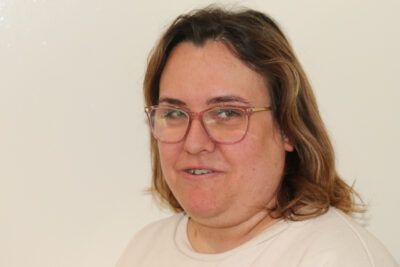
Kelly
Date: April 2025
Location: Mansfield
Interviewed by: Sam
The full recording will be stored in the records of the The British Library when the Our Life Stories project closes. Short excerpts from the interviews are shared below, which give an insight in Kelly’s full and detailed accounts.
Growing up
Kelly talks about her childhood, family life and her best friend growing up.
Transcript
INTERVIEWER(SAM): Growing up where you lived and your home.
KELLY: When-? Oh, I grew up in Mansfield when I was with my mum and dad, and I went to the primary school in that area.
INTERVIEWER(SAM): What was it like at Mansfield growing up?
KELLY: It had its toughest because when I was younger I was bullied quite a lot when I was at school and that had a big impact on everything that you did.
INTERVIEWER(SAM): What are some of your earliest memories?
KELLY: I grew up with a friend that had Down’s Syndrome, and she had a major impact in everything that I did, because she taught me how to do some Makaton signs and that we used to do. She took me on holiday a few times.
INTERVIEWER(SAM): So, the next part is about family, parents, siblings, grandparents, etc. Can you tell me more about your family?
KELLY: I grew up with my mum and dad, and my grandma was involved and we had to quite a lot to do with my grandma because she looked after us as my mum and dad worked. So, we used to – she had a caravan that we used to go on holiday to in Skegness quite a lot of the times.
INTERVIEWER(SAM): What were your parents like?
KELLY: They were good that my mom worked as a carer or in a nursing home rather. So, she worked nights and sometimes my dad worked nights.
INTERVIEWER(SAM): Do you have any siblings and what were your relationships like?
KELLY: I have a brother, but we didn’t really get on as much as you do that like with your siblings, you’d argued quite a bit.
INTERVIEWER(SAM): How old is your brother?
KELLY: He’s thirty…two.
INTERVIEWER(SAM): Is he older or younger than you?
KELLY: Younger.
INTERVIEWER(SAM): Do you have any special memories with your grandparents?
KELLY: Going on holiday to Skegness quite a lot of times, like going to the arcades and going to the beach. And we used to go to the arcades quite a bit with my cousins and that. So, it was quite good fun.
INTERVIEWER(SAM): What was school like for you?
KELLY: The school was tough because I was bullied quite a lot because of a condition that I’ve got was Neurofibromas means that I’ve got like spots on me. So, they used to pick on me quite a bit for it.
INTERVIEWER(SAM): What was your favourite and least favourite subjects at school?
KELLY: I didn’t like maths and English because I struggle to understand it and it didn’t really make sense. And I struggled to write and stuff.
INTERVIEWER(SAM): Did you enjoy learning?
KELLY: No.
INTERVIEWER(SAM): Why didn’t you enjoy learning?
KELLY: Because a lot of time, I found it difficult to understand what were going off. And I was a lot more low level than what everybody else was. So, it made it a lot harder to understand what was going off.
INTERVIEWER(SAM): Who were your childhood friends?
KELLY: I had a best friend who had Down’s Syndrome. She was called Rhianna. And we used to do a lot of singing and she taught me a lot of sign language and stuff, and we did quite a lot together.
INTERVIEWER(SAM): What did you enjoy doing together?
KELLY: We did dancing and then some – [We] did quite a bit of singing at times.
INTERVIEWER(SAM): What kind of dancing did you do?
KELLY: Just different music. I like the music, you know like the music that you listen to when you’re younger, like steps and things like that.
INTERVIEWER(SAM): Are you still in touch with any of your friends from that time?
KELLY: No.
INTERVIEWER(SAM): Who are the most important people in your life now?
KELLY: Probably my support workers because they’re the people that help us, they help me a lot. And the friends you’ve made from United Response. They’ve made a big difference. And they’ve… make everything worthwhile about how you’re doing, because they care about you, you know they care about you.
Getting involved
Kelly explains all the ways she is getting involved at United Response, including staging a play, joining a choir, and a new podcast.
Transcript
INTERVIEWER(SAM): What do you do at United Response?
KELLY: I do a podcast. I go to the choir, and then we also go on day trips with United Response and holidays. And we do drama-
INTERVIEWER(SAM): What drama plays have you played?
KELLY: We’ve done This Is Me, which was a story about everybody would join in their life story and the obstacles they’ve had to overcome with support and bad support. And then we did Cinderella where I played Cinderella and then soon we’re going to be doing Grease for the summer.
INTERVIEWER(SAM): How did you make This is Me?
KELLY: We basically spoke to everybody who wanted to be a part of it, and they said what’s their stories have been like supported or the bad support they had. But then in the end, having United Response had made a huge difference to everybody’s life, and it’s made everything brighter and they care about what you do when they want to be part of your life and-
INTERVIEWER(SAM): How long did it take you to make it a thing?
KELLY: I think…-
SW(LIZ): Well, it’s a work-in-progress, isn’t it?
KELLY: Yeah.
SW(LIZ): We have been taking bits away, so we’ve been going on tour with it for about a year now. So, we’ve adapted it, made it longer in some bits, but we started doing it. It took us about 12 weeks?
KELLY: Yeah.
INTERVIEWER(SAM): What is your favourite part of making it?
KELLY: It’s sharing our stories I think because even though everybody’s story is different, it’s kind of all the same that they’ve had bad support or they’ve had bad support from parents and everything. And then in the end, having support through United Response has made a huge difference to everyone’s lives.
INTERVIEWER(SAM): What was your story in the play?
KELLY: My story is about like how my parents weren’t very nice and they didn’t understand that I had a learning disability and that I needed support. But then like…knowing
you need support is a big difference because the support you get makes a difference to you because they do care about you and they want the best for you, even though sometimes you do struggle with all your mental health and stuff. But then the support workers are still there. Even if you are struggling.
INTERVIEWER(SAM): How does the support work for you?
KELLY: It helps me because I get to do day trips. They help me with my mental health when I’m feeling down. They’ve put on things like you can go to, like we do the podcast and drama, or they do the choir. And then I’ve made friends along the way. And then now we’ll go on day trips together. We’ve arranged a day to go shopping for somebody’s birthday. So, even though we are from like all different services, we all come together to do the same thing, like to make friends, to joining the choir or podcast.
INTERVIEWER(SAM): What is the podcast about?
KELLY: It’s going to be about… We’ve all got different subjects- We’re all going to have two subjects to talk about. Might be like mental health or it might be like the support you get from social work, or about being gay or being different, but then you’re going to talk about your experiences of that and what it means to you, and then you’re going to hear other people’s stories as well, what happens to them or what they’ve experienced in those subjects.
INTERVIEWER(SAM): How does the choir work?
KELLY: Well, we meet on a Thursday, 5 to 7, and we do a range of different songs. And then some of the songs. We’ve been learning the singing and signing for it, which I really enjoy. And then we’ve been having experiences where we can have solos and everything. We performed at a Christmas play that – United Response in Nottinghamshire has got a new service opening, so we’ve been asked to sing there, so we’re going to be doing that as something to open the new office building that they’ve acquired.
Diagnosis
As someone who was diagnosed with a disability later in life, Kelly talks about coming to terms with this, and what changed when she started being supported by United Response.
Transcript
INTERVIEWER(SAM): When did you learn about your disability?
KELLY: Mine was a late diagnosis, it wasn’t until I was 21, I think. Because I’ve always known something was wrong. Because I’ve got like Neurofibromas and that can link to having a learning disability. But nothing was ever written down until I was like 21. And then it’s just like knowing you were different, but not knowing the reason why.
INTERVIEWER(SAM): How has that helped?
KELLY: It’s helped knowing that all there’s times at school when you did struggle, that there was a reason why you were struggling, that none of the teachers or anything really wanted to help you. But then I understood that there was a reason why you are the way you are.
INTERVIEWER(SAM): How did you feel at the time?
KELLY: I think kind of relieved because it was like I was struggling with learning at school and I struggled at college, but then nobody really wanted to help you when you were struggling because you were struggling, like with your writing. And sometimes the understanding of people- A lot of times I struggled to understand people’s tone of voice or things like that. But then it helped me to know the reason why you did.
INTERVIEWER(SAM): How is it affected your life?
KELLY: A lot because it means that…all those times that I didn’t have support, that I needed support and that they needed to help me become better and stuff.
INTERVIEWER(SAM): What are some key moments or milestones in your life?
KELLY: Probably moving to United Response because before I was in a care home for a year. But then they promised you the world and promised you they wanted to be involved. And they – But then they didn’t really want anything to do with you, but then- Because a situation happened, and then they didn’t want to support anymore or didn’t want anything to do with you, and then you didn’t know where you were going, but then you ended up going to United Response and then it ended up being in for the better.
INTERVIEWER(SAM): How long have you been living at United Response?
KELLY: For just over three years that I’ve moved into Brook Street, and then I’ve met some amazing people. There was another person who lived there. We used to go out and go to cinema quite a bit. Or we’d go – we’d might go to Whitby or we went to York and that, but then she went in hospital and then she went into a care room but then she passed away. So, I think that’s had a big impact because it just feels like rather there’s like a hole and it feels rather empty without her.
INTERVIEWER(SAM): Was there a time that changed the way you see yourself?
KELLY: I think when I was first supported by United Response, because before people didn’t really want to help you achieve stuff or sometimes, they overestimated stuff you did understand. And then people need to realise that sometimes you don’t always understand everything that they are saying, and that they may need to change what they’re saying to make you understand it better.
Supporting mental health
Kelly talks about people’s perceptions of disabilities, and how mental health support can be improved.
Transcript
INTERVIEWER(SAM): What’s been one of the hardest things you’ve faced?
KELLY: Probably when you’ve struggling with your mental health and the lack of support you can get sometimes and you can feel like you’re asking for support, but then you can’t get anything, and then you don’t know – you can’t access that help and I think that’s more difficulty. Or when staff don’t understand what’s going off in your head, and then you’re frustrating them because you can’t communicate it well, you’re trying to communicate it, but then it’s coming across as anger and things like that.
INTERVIEWER(SAM): How do you think people view disability?
KELLY: I think sometimes it’s like people’s lack of understanding of people with disabilities or mental health or anything like that. People don’t understand that. So, then they look at you like you’re weird or you’re different. They don’t really say that there is a person behind it.
INTERVIEWER(SAM): Do you feel understood by others?
KELLY: Not all the time. I think sometimes people overestimate you sometimes of what you do actually understand, and sometimes you don’t always understand everything that’s been said to you or like how people word things they use like complicated words, so then it makes it more harder for you to understand what they are saying.
INTERVIEWER(SAM): Have you ever faced discrimination or felt judged?
KELLY: Probably with my mental health. Like when I was struggling with it, people wouldn’t listen. When you tell them you’re struggling, then you need that help. It makes it a lot harder when people don’t listen or you’re trying to access help. Then they’re saying you’re too complicated or you can’t access it, but then they’re not giving you any help in return.
INTERVIEWER(SAM): What are you most proud of?
KELLY: Probably coming to United Response and doing all the plays and choirs and making new friends because making friends is really, really hard because I struggle to trust people and let them in, but then with doing those things, you try to make those friendships and those people do want you around and do ask you to join in things that they’re doing.
INTERVIEWER(SAM): How can mental health support be better?
KELLY: I think the training because it’s all – it’s just basic, basic. And I don’t think it goes into things like if someone’s got like a personality disorder or someone’s got other things that can be linked to it, they don’t – There’s not enough information out there. And then sometimes staff think they take it on board, but then they think it’s that they’ve done something wrong. They’re not seeing it as like- oh, you might be just having a bad day. You’re not trying to be horrible to that staff member, but you’re having a bad day. It’s not what they’ve- they’ve not done anything wrong. And I think sometimes we need to understand that they have not done anything wrong because you’re having a bad day and you can’t see the good in everything, so you’re struggling, but they don’t need to take it like on board in that they’ve done something wrong because it’s not what they’ve done. It’s just like what’s going off at the time with you.
Aspirations
Kelly talks about some of her proudest achievements, and wishes for the future.
Transcript
INTERVIEWER(SAM): Have you achieved something that others don’t expect?
KELLY: I think taking part in choir and people. That’s different because I wouldn’t normally do that, and doing the acting and trying to learn all the – having to remember everything that you have to do in Cinderella as well, that had a big thing.
INTERVIEWER(SAM): How have you changed over time?
KELLY: I think being supported has changed because that you know – before when you had support workers and everything, a lot of them did break promises, [they] said they were going to be involved or said they wanted to, but then they never stuck to the words. But now people do stick to their words or they know not to say they’re going to do something if they’re not going to do it.
INTERVIEWER(SAM): What have you learned about yourself?
KELLY: That I am caring and kind and… that people do enjoy being around me.
INTERVIEWER(SAM): Is there something you’ve overcome that makes you proud?
KELLY: I think like sometimes arguments get started in the friendships, like not taking it all on board and trying to take it to staff to kind of help you do as well. So you’re not like saying thinking it’s all your fault that everything’s going wrong.
INTERVIEWER(SAM): What would you like to do in the future?
KELLY: I think doing Grease still. Still have day centre and everything because now there’s lots of changes happening in Notts County Council. So, we don’t know whether there’s going to be a day service in a couple of years, because we’re lucky in our area that we’ve got one, because Derbyshire and other places haven’t got a day service anymore, so we don’t know whether it could eventually just cease to exist.
INTERVIEWER(SAM): Have you any goals or dream job you’re working towards?
KELLY: I want to go to Disneyland Paris. That’s one of my dreams.
INTERVIEWER: Why’d you like to go to Disneyland Paris?
KELLY: Because I really like Disney, I think I want to go and see the fireworks that they do at night time.