Roy’s life story interview
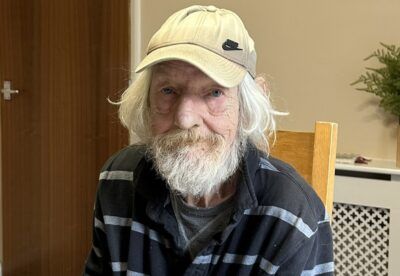
Roy
Date: July 2025
Location: Bradford
Interviewed by: Will
The full recording will be stored in the records of the The British Library when the Our Life Stories project closes. Short excerpts from the interviews are shared below, which give an insight into Roy’s full and detailed accounts.
Since recording this interview, Roy sadly passed away in early 2026. Roy was passionate about telling his story and having the time and space to tell it in his words and in his own way.
We share his interview in tribute to Roy, with gratitude for the care and detail he gave in recounting his life. Roy’s voice has given an important contribution to the Our Life Stories project and its lasting impact. Thank you, Roy.
Childhood and early work
Roy talks about his upbringing in an orphanage and his first job working for a brewery.
Transcript
WILL: Could you talk to me a bit about your family growing up? Like who was in your house when you were growing up?
ROY: I was brought up in an orphanage.
WILL: Right.
ROY: Well, an orphanage, yeah. I never knew my mum or all that. I don’t remember. I never knew her.
WILL: Yeah.
ROY: We were just in a children’s home. Yeah. That’s about it.
WILL: What was it like there growing up? Did you not like it? Did you enjoy it?
ROY: Oh, yeah it was alright. You know what kids are like, don’t you?
WILL: Oh, yeah.
ROY: (laughs)
ROY: We had fun times, yeah.
WILL: How old were you when you left there?
ROY: I left at sixteen.
WILL: Yeah.
ROY: In the fifties, the social worker didn’t think I couldn’t look after myself. So, they put me in Castleberg, that’s [in] Giggleswick. Castleberg near Settle. And… what were I gonna say?
WILL: Just talking about sort of, leaving when you turned sixteen.
ROY: Oh, yeah. I went to Castleberg. It was like a hospital.
WILL: Oh, right, OK.
ROY: But I used to ride to work and that from there. And I worked in a Brewery wagon Andertons of Skipton. And I had that job for ages.Most of the deliveries was in a place called Lancaster.
WILL: Yeah.
ROY: Because it was near Morecambe and Settle is on the main road to Morecambe. I used to get all over. Yeah.
WILL: How did you get that job at the brewery? Was that set up?
ROY: No, it wasn’t a brewery.
WILL: OK.
ROY: It was brewery, but it was an off-license brewery.
WILL: Oh, right OK.
ROY: You know what I mean? Right, because it’s…Oh, what’s it called? Andertons of Skipton.
WILL: Yeah.
ROY: The firm, delivering beers, and that. You know what I mean? Barrels and all that. I had that job for ages. I worked at Castleberg. I worked from seven on Wednesday to Friday I went in.And that’s all I did, you know, that’s all- The rest of time, it was Morecambe. The local, so they didn’t need me. But when we went to Lancaster, we used to have barrels and boxes of beer, Used to send down the chute into the cellar. I used to be the bottom to catch them.
BOTH: (laughing)
ROY: You know, put them down in the cellar. They were the good old days. Yeah.
WILL: Do you remember how you got that job? Was that set up by you or by someone else?
ROY: I can’t remember.
WILL: Yeah, no worries
ROY: I was there for a few years. Just my luck, you know. Because I was at Castelberg then. They’re like a homeless- Home, Castleberg. Call it Castelberg, Castleberg. Yeah. Next to the public school in Giggleswick. And that was my first job and I really loved it. We used to get all over. But the main jobs were in Lancaster.
WILL: Yeah.
ROY: You know, near Morecambe. So we used to go out there. Boxes of wine and things like that, you know what I mean? And that was it, yeah. And I used to – when we had a barrel, I used to put a big cushion on the floor. I was the driver’s mate. We had one driver. And I get a barrel, load it gently onto this cushion, so it doesn’t break. You know the wooden casks? And send it down to the wagon who were down there.And that’s about it, yeah.
Farm work
Roy talks about another job role which he enjoyed, as part of a busy farm.
Transcript
ROY: Oh, I worked on the farm. I worked on the farm then at Giggleswick. And that’s about it. We used to get paid but we didn’t get paid but the boss liked watches. At Castleberg. Watches, nice clothes and that. [inaudible] They did it at Castleberg hospital. Yeah. And then there’s another job but I can’t remember what it was. Oh, dairy. [inaudible] And it was shift work. It was six till two, two till ten, ten till six in the morning. So, I worked there. Scraping rollers when the milk dropped off.
WILL: Yeah.
ROY: And cleaning the yoghurt machine, you know the big yoghurt churn. I enjoyed it, yeah. But I didn’t like nights.
ROY: (laughs)
ROY: But, sometimes you work nights, we work mornings.
WILL: Yeah.
ROY: I was in the week, the afternoon. I worked two till ten and then nights, well [inaudible]. I liked that Dairy. And… I can’t remember what I did after that. Oh, I worked on the farm.
WILL: Yeah.
ROY: Actually… and then I worked there and I went to a farm at Wigglesworth and I lived in, you know what I mean?
WILL: Oh, right, yeah, yeah, yeah. On the farm?
ROY: In the farm. And they were really nice people, so- and I learned hot to milk cows and I even learned and was able to help give birth to calfs.
WILL: OK.
ROY: He taught me everything, Mr Harrison. Taught me everything.
Time in hospital
Roy remembers his time being treated in a specialist hospital and undergoing ECT (Electroconvulsive Therapy), then going on to work in the hospital.
Transcript
ROY: And then I had a nervous breakdown. I don’t know what happened to me but my mind just went. I just went barmy. I just went balmy, so I got admitted on the secure ward, had electric treatment, ECT, electric treatment…
WILL: Yeah.
ROY: That’s where they put things and that. It sort of put me [in] the right thinking, you know what I mean? And the… I had the ECT. And then- I was thinking all sorts of- before I had the ECT, you know what I mean? Electric treatment. After I had that… After I had that ECT, I was clean in my head and that, so,I was thinking straight instead of thinking all sorts. This electric treatment, you know what I mean?
WILL: Yeah, I know what you mean.
ROY: And I was thinking all sorts of things. They put me in the side room and I went into the psychiatrist in the thing. And they were asking me how I felt and that. You know what I mean? And… I told them. They gave me a [inaudible]. They gave me an injection, what relaxes you, and you can’t help talking. And I talked, I must have done some of that because they put me in the side room because I was still talking because of those drugs, you know. All questions, I still talk, anyway. And I was in the side room for a day and then… In the side room and… still talking. So they put me on protection, do you know what I mean?
WILL: Yeah.
ROY: Like a cell, I went in there. And it wore off. Then, Mr Mark says, “You can go for a walk now. [We] don’t need to lock you up” You know what I mean? Because I said something- I must have said to the psychiatrist- I forgot what I told him it’s such a long time. Anyway I had my freedom. Oh, I started working in the hospital laundry. In the local hospital, filing and all that. And I used to do the laundry. I used to do the laundry there and that. But my job was on the wagon, you know loading them up and that. And taking- they call it merlin driver. Taking- bringing dirty into the one laundry. Then, taking clean laundry on the other side. [inaudible]. That was alright and then… I worked there in laundry for a few years… and then… what did I do then? Oh, I went on working the little truck taking laundry around the wards, not the wagon. I did that for a bit and-
WILL: Like a little cart?
ROY: Pardon?
WILL: Like a little cart to push it around?
ROY: Yeah. And… I did that for a bit. What did I do then? Oh, and then I got a new job being a plumber’s mate in the hospital.
WILL: Oh, right, yeah.
ROY: Westwood and just putting windows in. And just doing general things that plumbers do. I did that for years. And then… Colin and George, the plumbers they were alright. We used to unblock drains and all sorts. I did that for a bit. And then… I can’t remember what I did? Oh, gardens. I worked on gardens.
WILL: God, you’ve done all sorts.
ROY: Well, in Westwood and that. Yeah. Other than that, I worked on gardens, you know. Mowing the lawns and things like that. And I think that’s it. That’s about it.
WILL: That’s about it. That’s quite an extensive work history. That for ‘that’s about it’.
Home of 20 years
Roy talks about where he lives now, supported by United Response and another job he had in a workshop.
Transcript
WILL: When United Response came into the picture, do you remember, do you sort of-
ROY: No, that was from Westwood when they came.
WILL: Ah, was that United Response? Westwood.
ROY: Westwood, that was where I went to get treatment, I went to Bradford. Cooper Lane. Westwood Hospital. That’s where I got my treatment for my loopy head and I got ETC and all sorts there, yeah.
WILL: How long have you lived in this house?
ROY: Twenty years, is that right, Janet?
SW: Yeah, about that.
WILL: Twenty years? Bloody hell. It’s in good knick if you’ve been living here for twenty years.
ROY: And I used to do all sorts at Westwood. Used to mend furniture. They had a workshop, where you went to mend furniture because all children were in chairs with trays on them and they just to break through some, mend them up on the workshops, you know what I mean? And also, put table tops on [inaudible] put windows in on doors and did all sorts. Yeah. And then I did and I went to be a plumber’s mate, which I really enjoyed. And I- I’m trying to remember… Oh, I worked in the kitchen for a bit, main kitchen…
WILL: All the jobs. All of them.
ROY: I know.
ROY: (laughs).
ROY: I know. I was always there a long time, you know what I mean? And then… when we all went into [inaudible]. And then care in the community came in and that were it. I landed here.
WILL: How old were you when you stopped working?
ROY: …
WILL: Doesn’t have to be exact. Don’t worry about it.
ROY: Can’t remember.
WILL: No. Did you work when you lived here, or had you finished by the time you moved in here?
ROY: I finished. Yeah. The Care Community came in and they closed Westwood down.
WILL: So was that why- the only reason you left there was that they closed it down? Would you have stayed had they kept it open?
ROY: Yeah, hoped so. The care in community. Mrs Thatcher…
WILL: Sorry, say again?
ROY: Mrs Thatcher, the Prime Minister. Don’t you remember? She had a lot to do with it.
WILL: She had a lot to do with a lot of things, didn’t she, Thatcher?
ROY: Yeah.
WILL: Bit before my time, gladly.
ROY:(Chuckles)
Hobbies and moments
Roy talks about what he enjoys doing, and remembers some of the standout moments from his life.
Transcript
ROY: Any questions?
WILL: Yeah. I’d love to hear more about what your life is like now. What you like to do.
ROY: I like my room. I never had a room. Because it was all big dormitories in Castleberg and Westwood, you know what I mean?
WILL: Yeah. So it’s the first time you had a room of your own.
ROY: I’ve got a room of my own, so I listen to wireless, I’ve got a television and sometimes I go into town. I go for a walk sometimes. That’s about it, isn’t it?
WILL: So, what do you think your typical day looks like most days?
ROY: Most days. Well, it just depends on the day. Some days I take myself up into town, and buy some films because I’ve got a DVD player. So, sometimes, I get… don’t I Janet?
SW: Yeah, you do.
ROY: Go to town. Get myself some CDs, and films. You know?
WILL: Yeah. What kind of films do you like to watch?
ROY: Well, Audrey calls them Bang, Bang.
ROY: (laughs)
WILL: Action films?
ROY: Action. Yeah.
WILL: Yeah. What is your favourite film, do you think?
ROY: I like Denzel Washington. Denzel Washington.
WILL: Yeah, yeah.
ROY: And I get all sorts, yeah. Do you know that shop opposite Specsavers?
WILL: I don’t live in Bradford, so I don’t know. We’ve come from York.
ROY: …
WILL: We’re from York, so…
ROY: That’s about it then.
WILL: You said you buy some CDs as well. What kind of music do you like to listen to?
ROY: Well, it just depends on what mood I’m in.
WILL: Do you have a favourite band or anything like that, or…?
ROY: No, not any. But I put them on. I listen to the radio.
WILL: Yeah. What’s your favourite radio station to listen to?
ROY: Radio Two.
WILL: Radio Two. I can’t stand radio one. What do you think’s the most important thing has happened in your life? What[’s] the major event is or was?
ROY: ETC. [It] put my brain right.
WILL How were you before that?
ROY: I-
WILL: You said you had a nervous break. Could you tell us a bit more about that?
ROY: I was thinking all sorts. Not very nice. Not very nice. All sorts. So… I was locked up, you know what I mean? And when I had my ECT, I got to see them. Before that, I don’t know what happened. I just got up in the morning and- whoo, my head was all over the place.
WILL: Just overnight?
ROY: Yeah, yeah.
WILL: That’s so bizarre.
ROY: It just hit me like a brick. Just sent me a nervous breakdown, they call it, don’t they?
WILL: Yeah.
ROY: That was in Castelberg, I then I went to Westwood. I went under a psychiatrist, which were very nice, the two of them. Dr Price and Dr Spencer. Very nice, yeah.
WILL: So, what kind of support do you have now?
ROY: I have the staff.
WILL: Yeah. So, what kind of things do they do? What do they help you with?
ROY: Just… They’re mostly peacekeepers, you know what I mean? Aren’t you, Janet?
SW: You’re peaceful [inaudible].
ROY: You know what I mean?
SW: (Chuckles)
ROY: And… It’s alright, yeah.
WILL: Yeah?
ROY: I just do the laundry, do my stuff. That’s it, yeah.
WILL: Do you do a lot of chores then around the house?
ROY: Yeah, I empty the machine, the washing machine. That’s about it.
WILL: What’s your least favourite one to do?
ROY: Pardon?
WILL: What’s the one you like the least doing chore-wise?
ROY: I don’t have much chore, don’t I? I don’t have much chore.
WILL: Just… You don’t mind just doing-
ROY: Just doing.
WILL: So, how is living here different to somewhere like Castleberg or Westwood? You said obviously, you have your bedroom.
ROY: Basically, it’s different to… We used to be looked after by male nurses, but now they’re carers, you know what I mean? Yeah, I’m alright here. Yeah, I’m happy enough, yeah.