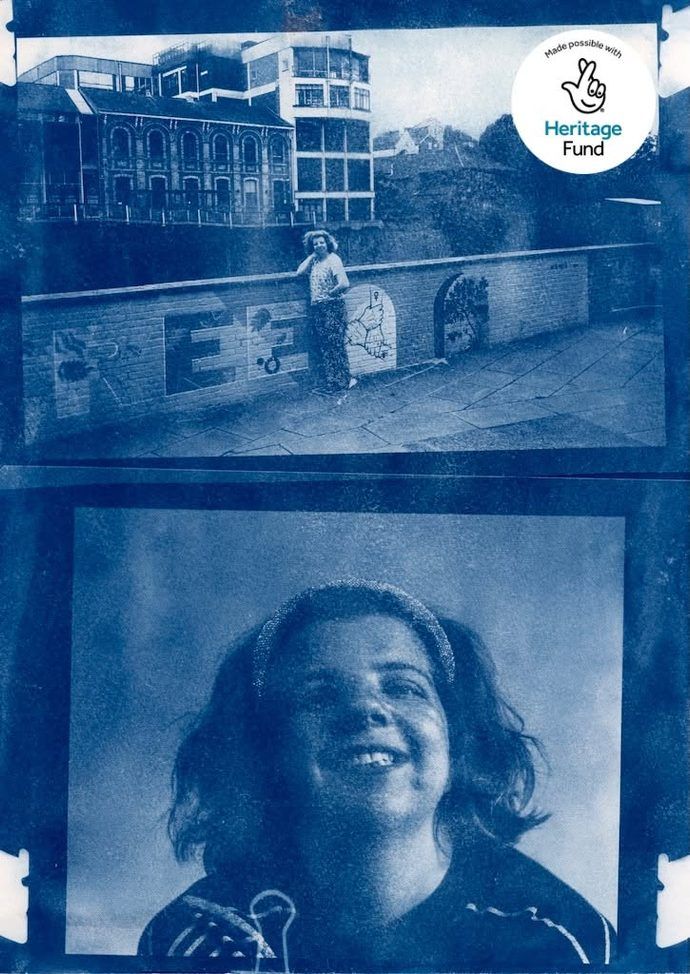
Curating Our Life Stories
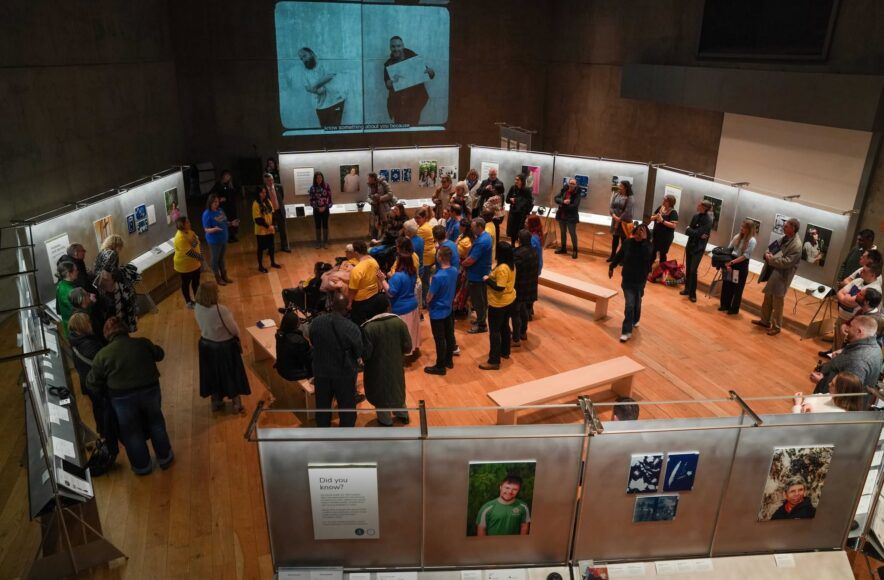
When people visited the Our Life Stories exhibition, they saw an installation filled with photographs, artwork, audio clips, film, personal objects and the words of people with learning disabilities. What they didn’t see was the months of discussion, decision-making, editing, design development and collaboration that went into bringing those stories together in a way that felt authentic, accessible and respectful.
At the heart of the project are 59 oral history interviews collected by interviewers with learning disabilities. Together, these interviews explore people’s lives, relationships, achievements, challenges and aspirations, creating a rich and often overlooked record of contemporary social history.
As we moved from collecting interviews to creating an exhibition, the question was never simply what do we display? Instead, it became how do we honour these life stories in a way that allows visitors to connect with the people behind them? From the outset, we wanted visitors to encounter individuals rather than labels. We wanted people to hear voices, experience personalities, recognise shared experiences and challenge assumptions about disability. Every curatorial decision came back to these principles.
Who was involved?
The exhibition was co-curated by myself, Maxine Spry, Senior Fundraising and Impact Manager and Charlotte Moore, Project Manager for Our Life Stories. Together, we worked through hundreds of hours of interview recordings, photographs, participant-created artwork and supporting materials to identify the themes that connected people’s experiences.
These eventually became the seven thematic sections of the exhibition: Childhood and Family, Education, Disability and Mental Health, Hobbies and Identity, Relationships and Friendships, Independent Living, and Work and Volunteering.
One of the biggest challenges was transforming such a large body of material into an exhibition that felt coherent without losing the individuality of the stories being told. Every photograph, audio clip, sketch, cyanotype, object and interpretation panel had to earn its place. We wanted visitors to leave with an understanding not only of individual lives but also of the shared experiences, barriers, joys and achievements that emerged across the interviews.
Alongside shaping the narrative of the exhibition came the practical challenge of creating interpretation. Working closely with copywriter Michelle Collier, designer Anna Carter and exhibition designer Freya Spencer Wood, we developed more than 250 object labels and over 40 interpretation panels, alongside exhibition guides in multiple formats, bookmarks, postcards and supporting materials.
Each draft went through multiple rounds of editing and refinement as we balanced accessibility, consistency and authenticity. Accessibility was never treated as an add-on. It was fundamental to the exhibition from the beginning.
We developed Easy Read guides, simplified exhibition guides, audio content, transcripts, accessible maps and floorplans, and carefully considered everything from font sizes to lighting and paper stock. We wanted visitors to engage with the exhibition in a way that worked for them, regardless of how they accessed information.
How we told the stories
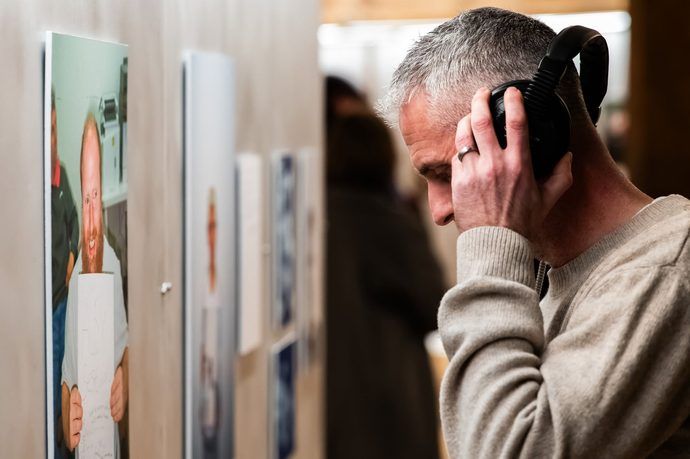
One of our favourite aspects of the exhibition was the variety of ways in which stories could be experienced. Visitors could read personal reflections, listen to interview extracts, explore participant-created artwork, watch the project film “Our Lives” created by award-winning filmmaker Edd Carr and engage with photography created throughout the project. Rather than presenting a single narrative, the exhibition offered multiple entry points into people’s lives and experiences.
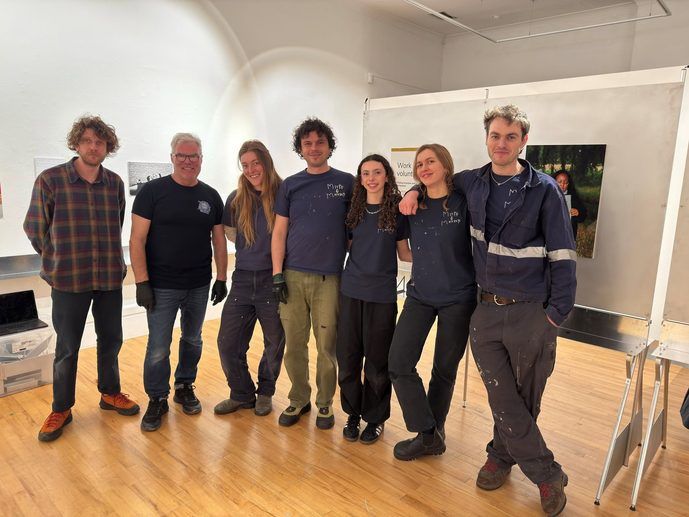
A particularly exciting moment came when we visited the Mitre & Mondays workshop and saw the prototype exhibition modules for the first time. After months of working with spreadsheets, transcripts, copy documents and technical drawings, seeing the exhibition begin to take physical shape was incredibly satisfying. The stories were finally moving off the page and into a public space.
Most importantly, there were the participants themselves. Over 100 people with learning disabilities and autistic people contributed to the exhibition. Their willingness to share their experiences so openly and honestly is what made Our Life Stories possible. Watching people enter the exhibition for the first time, hear their own voices, see their artwork on display and share the experience with family and friends was incredibly moving.
What we learned
Looking back, there is also an important lesson that we will take forward into the next phase of the project. While people with learning disabilities were central throughout Our Life Stories as interviewers, interviewees, artists, panellists and contributors, they were not as involved in the final curation process as we originally intended.
As production deadlines approached and the reality of delivering a national touring exhibition took hold, many of the final curatorial decisions were made by myself and Charlotte.
With launch dates fixed and significant amounts of content still to review, we simply ran out of time to develop the co-curation process we had hoped for. Although the exhibition was built entirely around participants’ stories and contributions, we would have liked people with learning disabilities to have had a more direct role in selecting content, shaping themes and deciding how stories were presented within the exhibition space.
The positive side of this reflection is that it gives us a clear direction for the future. When Our Life Stories enters a second phase, a priority will be to build more time for co-curation into the project timeline. With additional time and resources, we could support people with learning disabilities to take on curatorial roles, develop new skills and help shape how their heritage is presented to public audiences. This would make the exhibition even stronger, more authentic and more representative of the values that sit at the heart of the project.
The exhibition ultimately toured to York Guildhall, Nottingham Contemporary, Cornwall Museum and Art Gallery, and the Langdon Down Centre in Richmond, reaching more than 2,700 visitors. Along the way, we heard countless stories from visitors who had been moved, challenged and inspired by what they had seen and heard.
Curating Our Life Stories was about far more than creating an exhibition. It was about creating a platform where people with learning disabilities could tell their own stories in their own words, ensuring those voices are heard, valued and preserved as part of our shared heritage.
And that is what Our Life Stories has always been about.