A chat with Francesca – supporting United Response staff and people we support
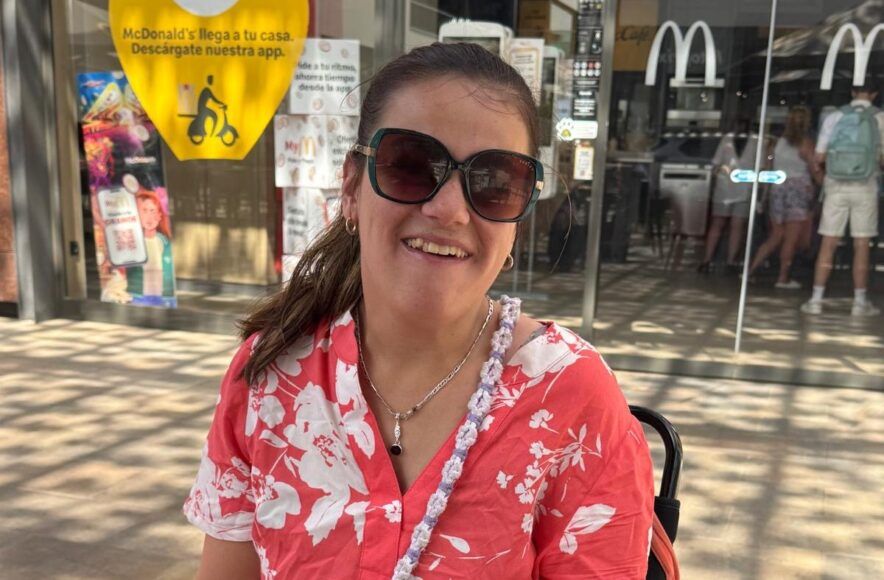
At United Response, our colleagues play an important role in shaping the support we provide. One of these colleagues is Francesca, who works as both a Stakeholder Engagement Support Worker and Induction Trainer.
She spends most of her time working closely with the people we support, improving the experience of new staff members, and finding ways to make them feel empowered.
We recently talked to her about what drives her work, and why giving people a voice is at the heart of everything she does.
Growing through the organisation
Francesca’s connection to United Response goes back several years, where she started out as a ROC College student.
“I’m proud that I’ve worked my way through the organisation,” she says. “After my two- and a-bit years as a student, I was fortunate to be offered an internship, which eventually evolved into the engagement and training role I do today.”
Francesca takes pride in helping new staff understand their roles and the values at the heart of United Response. For her, training is about more than information; it’s about shifting perceptions.
“I also work with the induction team alongside Debbie Cox, our area manager, on the onboarding process. I think of it as equipping people with the tools to do their job – rather like a safety trailer before the rollercoaster ride. Working with a range of people helps to change and challenge perceptions, and the way we view the world and the world views us. This work is never done.”
While she’s experienced a lot throughout her journey, one thing has always stood out:
“What has always inspired me is the dedication of the staff to learn from the downs and celebrate the ups, whilst ensuring that we also put first the people we support and their quality of life,” she explains. “I enjoy meeting people across the organisation and connecting with people on different projects. I like to come away from the job knowing I’ve made a difference in someone else’s life.”
With a very person-centred approach to her job that ‘takes into account the individual’s needs and wishes’, Francesca wants to use her skills to empower others.
“We enable people, not dis-able people, to get the most out of their lives that they possibly can. Everyone has a voice, and the people we support are the people who shape United Response. All people develop and grow and change, and I like to make sure their voices are heard across the company, so that their support changes with them.”
And some of her proudest moments at United Response? “The times when we do a People’s Forum or a roadshow,” she says. This is where she sees the impact of her job come to life.
“When you can see all the hard work the organisation does and people express that they’ve been heard, and that they’re heard as people first and foremost – not a disability; that really hammers home the importance of this work for me.”
Putting people at the centre of their own lives
Francesca also comes from a big family, giving her a unique insight into what true support looks like. “I have four brothers!” she says. “I love family time – just hanging out, being relaxed, being present, going with the flow and seeing what happens.”
When asked what good support means to her, she says that it enables growth and lets people live life to the fullest. Using a great analogy, Francesca explains:
“I like to think of it like the driving instructor that sits in the passenger seat, keeping the learner safe, but ultimately the learner is in the driver’s seat. They are in control. It is the same principle for the people we support – they should be at the centre of their lives, and the support should be in the background as much as possible.”
And when it comes to providing meaningful disability support, Francesca’s message is clear:
“Everyone in this world is an individual, and their disability will be individual as well. People often have assumptions – based on past experiences or other people they know – or fears of upsetting others, getting it wrong, or making the situation awkward.
But we have to be present, viewing the person and the situation as unique, taking a moment to read the signals and signs, and, importantly, looking past the labels to see the human.”
But how do we start to change these assumptions?
“This happens through education and talking to people: building bridges and narrowing gaps brings better awareness around disability,” Francesca tells us. “I know this takes practice and experience, but the more open and inclusive our society becomes, the stronger it will be in the future.”
Closing out our chat, Francesca wants people to remember one important thing:
“I am many things to different people, however, the last thing I want to be known as is disabled. I am a person rather than a condition. I hope I leave a positive impression on people, and the knowledge that when we marry hard work, dedication, and effective support, we can all thrive.”